
Fuelled, Not Frazzled: R&P x Nat on Protein, Meal Prep and Everyday Nutrition.
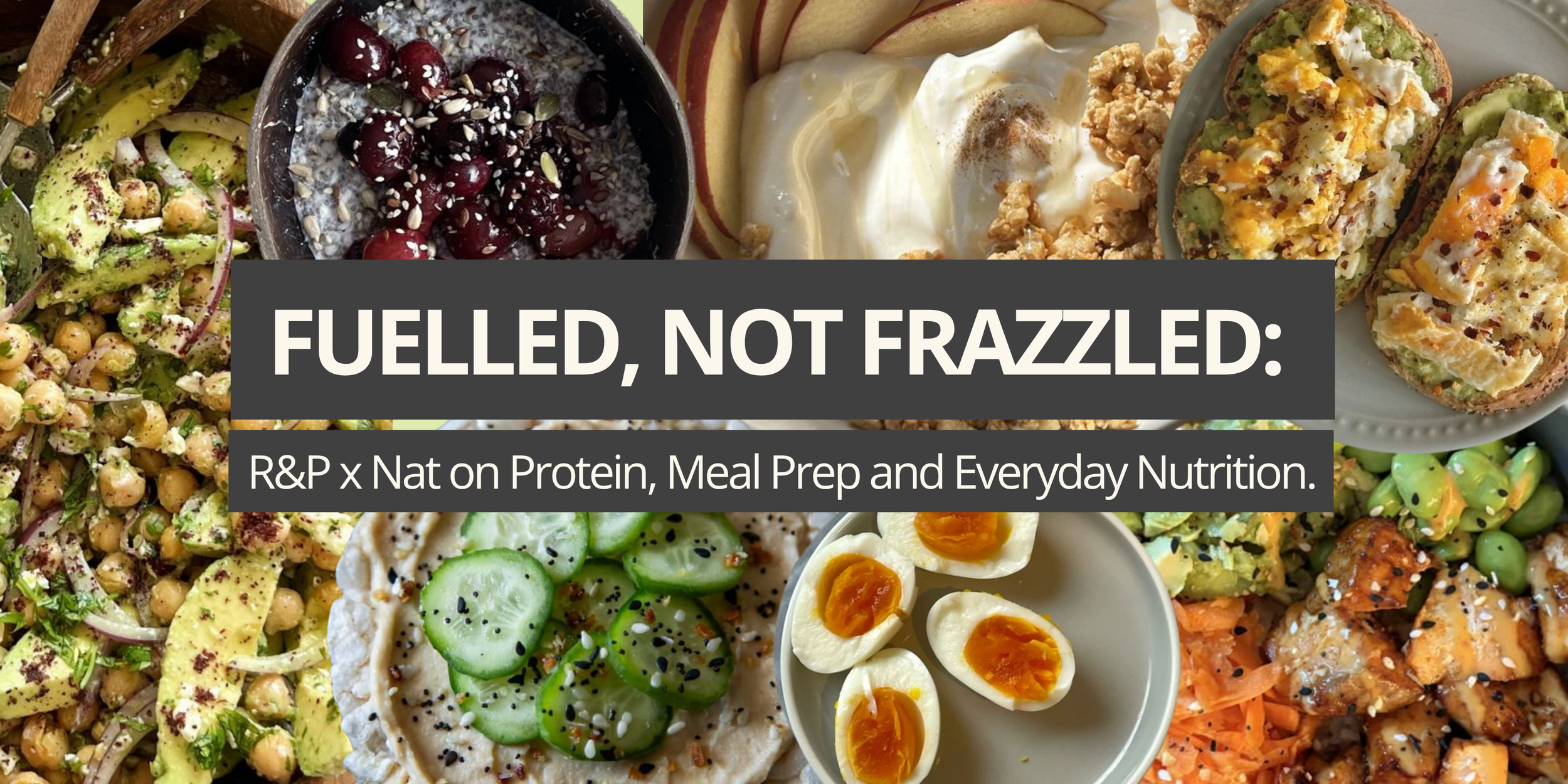
At R&P, we believe feeling strong starts with giving your body the support it needs. That is why we are excited to collaborate with Nat from Wholehealth, who shares our practical, balanced approach to women’s wellbeing.
Together, we are focusing on something that can make a real difference to your energy, training and everyday life: eating enough protein and making nutritious food easier to reach for.
This is not about following a perfect meal plan or spending your entire Sunday filling containers. It is about creating a few simple habits that help you feel fuelled, satisfied and ready for whatever your week brings.
Why is protein so important for women?
Protein is essential for much more than building muscle. It supports your body’s everyday growth and repair, while also contributing to immune function, hormone production and the health of your skin and hair.
For active women, getting enough protein can also help with:
Recovery after training
Maintaining and building strength
Feeling fuller after meals
Supporting steady energy throughout the day
Maintaining muscle while working towards body-composition goals
Protein needs vary according to your body size, activity level, health and goals. As a general guide, Nat recommends approximately 1.2–2 grams of protein per kilogram of body weight each day, with active women often benefiting from the higher end of that range.
You do not need to count every gram to get started. A simpler approach is to include a meaningful source of protein at most meals and snacks.
Build your meals around protein
When life gets busy, it is easy to rely on toast, snack foods or other quick carbohydrates. These foods can absolutely be part of a balanced diet, but they may not keep you satisfied for long when eaten on their own.
Nat’s advice is to choose your protein source first, then build the rest of your meal around it.
Easy options include:
Eggs
Chicken, turkey or lean mince
Salmon, prawns or tinned tuna
Greek yoghurt or cottage cheese
Tofu, tempeh or edamame
Chickpeas, beans or lentils
Next, add vegetables or fruit for fibre and nutrients, a carbohydrate such as rice, bread, pasta or potatoes for energy, and a source of healthy fats such as avocado, nuts, seeds, olive oil or hummus.
The result is a balanced meal that supports your energy and helps you feel genuinely satisfied.
Meal prep without the pressure.
Meal prep does not need to mean preparing every breakfast, lunch and dinner in advance. Nat’s approach is much more flexible: prepare a few useful ingredients that you can mix and match throughout the week.
Start by choosing:
Two or three protein sources
Two or three carbohydrate sources
Two or three vegetables
For example, you might cook chicken and boiled eggs, prepare a pot of rice, roast a tray of vegetables and wash some salad greens. Those ingredients could become a rice bowl one day, a wrap the next and a quick salad later in the week.
Keeping the components separate also gives you more variety and helps meals feel fresh.
Prepare for your hardest days
One of Nat’s best meal-prep tips is to look at your diary before the week begins.
When will you be training? Which evenings will you get home late? When are you most likely to feel tired or short on time?
Prepare for those moments rather than the easy days.
Choose one consistent prep day and set aside 45–60 minutes. You could:
Boil a batch of eggs
Cook chicken or brown some mince
Make one main dish for several lunches or dinners
Roast vegetables
Cook rice or quinoa
Portion yoghurt, fruit, nuts or crackers
Make overnight oats or chia pudding
Freeze an extra portion of curry, chilli or stir-fry
Even ten minutes of “light prep” in the evening can help. Pack tomorrow’s lunch, chop some vegetables, portion a snack or prepare breakfast before going to bed.
Small actions now mean fewer decisions when you are busy.
Easy ideas from Nat’s kitchen
Our collaboration includes a collection of simple recipes designed to make balanced eating feel achievable.
For breakfast, try a scrambled egg and spinach pita, sourdough topped with cottage cheese and berries, or a berry protein chia pudding prepared the night before.
Egg muffins with spinach, capsicum, tomato and feta are another convenient option. Make a batch and keep them ready for quick breakfasts or protein-rich snacks.
For lunch or dinner, Nat’s colourful prawn poke bowl combines rice, edamame, spinach, mango, avocado and a punchy tamari and lime dressing. Her Mediterranean chickpea salad is a fresh, fibre-rich option that can be prepared in bulk, while courgette curry makes a comforting meal served with rice, an egg and a spoonful of Greek yoghurt.
You can also turn a crispy rice and cucumber salad into a complete meal by adding salmon, tuna or boiled eggs.
The key is not to make every recipe at once. Choose one or two that suit your week and build from there.
Consistency beats perfection
Good nutrition should support your life, not take it over.
You do not need a fridge filled with perfectly portioned meals. You do not need to eat the same thing every day. You simply need a few reliable options that make eating well easier when life gets busy.
As Nat reminds us, meal prep is about reducing decision fatigue, making protein and fibre convenient, supporting your training and protecting your energy.
If it makes your week easier, it counts.
We are thrilled to bring Nat’s practical nutrition guidance to the R&P community. Keep an eye out for more recipes, meal-prep inspiration and realistic advice to help you feel strong, energised and well-fuelled.
